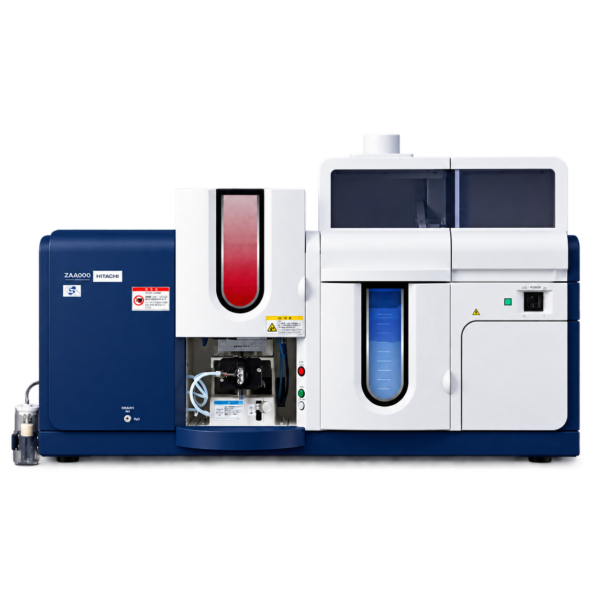
Atomic Absorption Spectrophotometry
AAS
When to choose this option: You need to determine the concentration of metals/elements in a sample (water, soil, food, fuel, plating baths, pharmaceuticals, batteries) — from standard down to very low (ppb) levels.
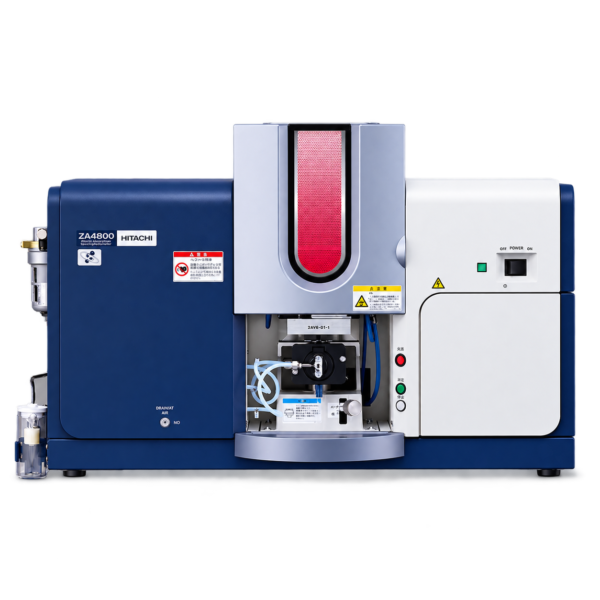
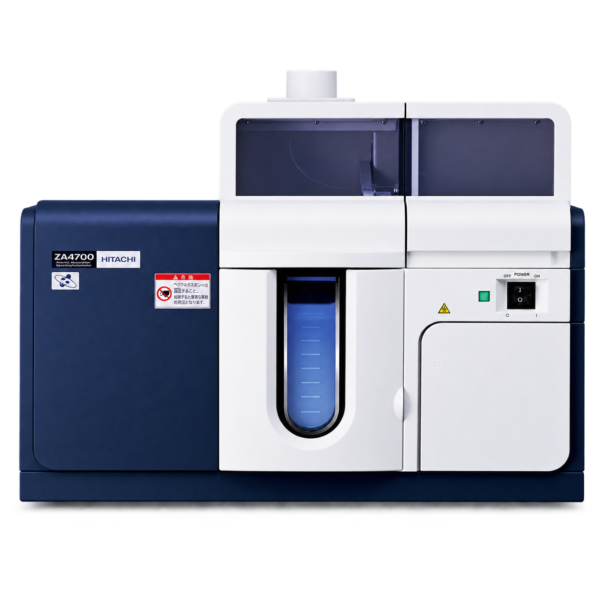
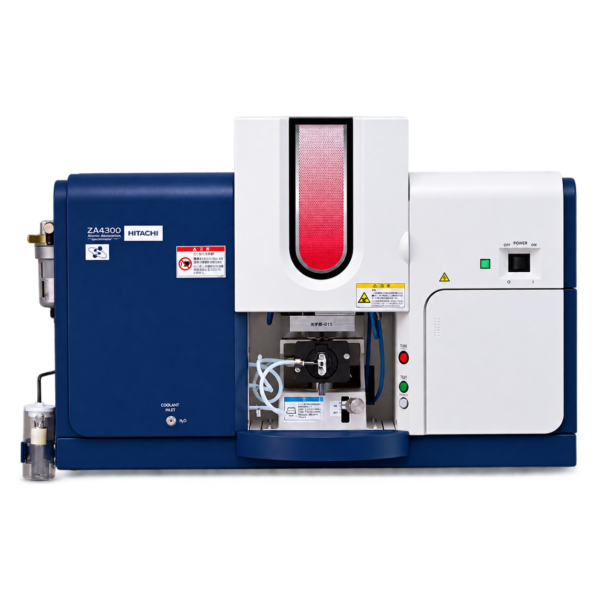
Atomic absorption spectrophotometry (AAS) measures the concentration of metals and metalloids in a sample based on the absorption of light of a specific wavelength by the atomized sample. The Hitachi ZA4000 series uses polarized Zeeman background correction (a permanent magnet) combined with a dual-detector system — this combination delivers a stable baseline and high sensitivity, and corrects for elements that standard D2-lamp correction cannot (e.g. sodium, potassium), without needing to select a correction method separately for each element. The new rapid sequential mode (available on the ZA4800 model) further speeds up measurement for samples with multiple elements.