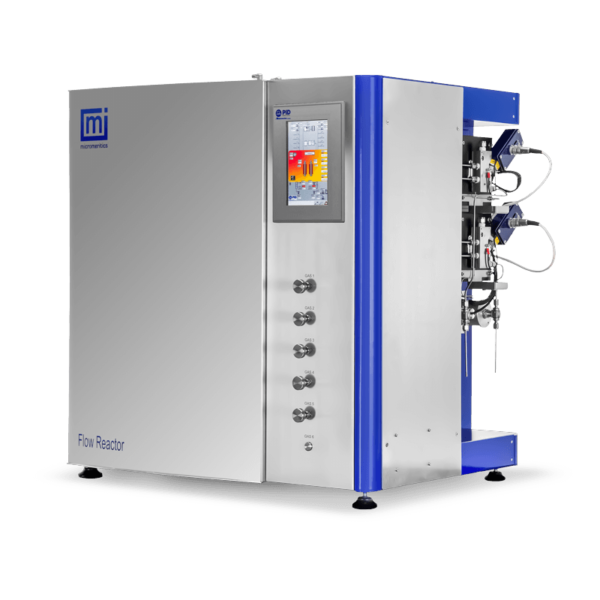
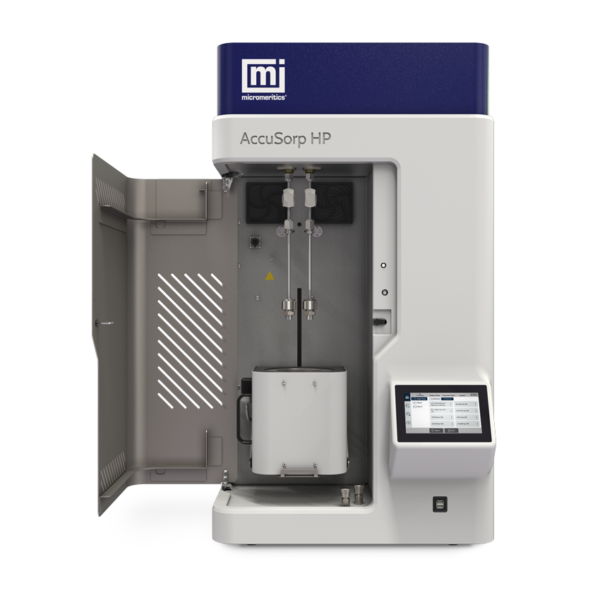
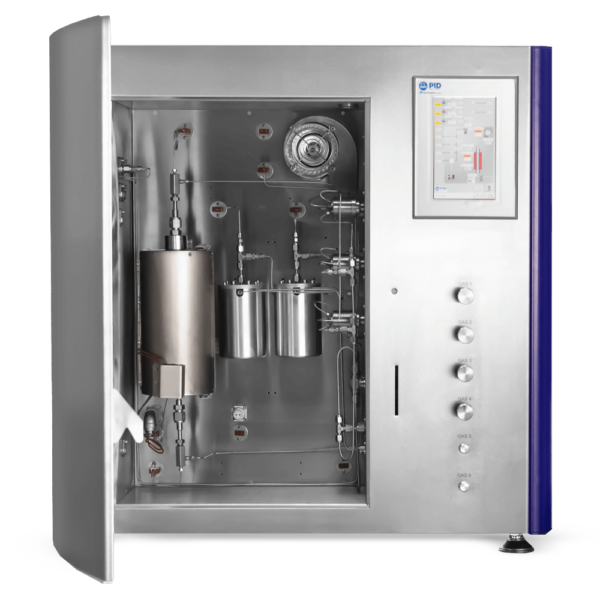
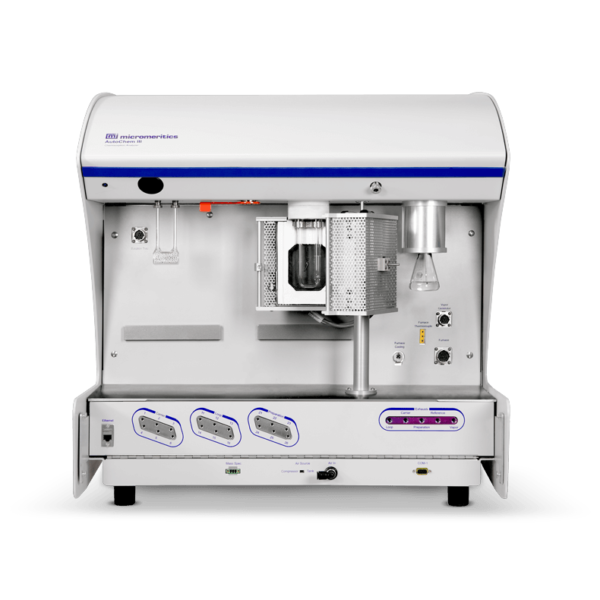
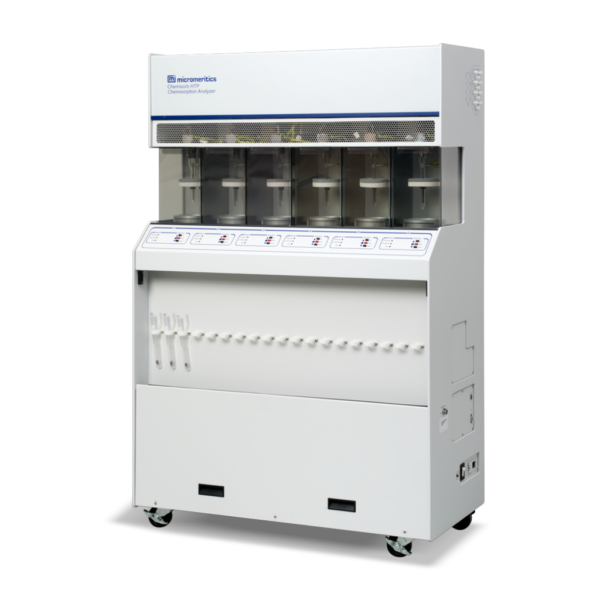
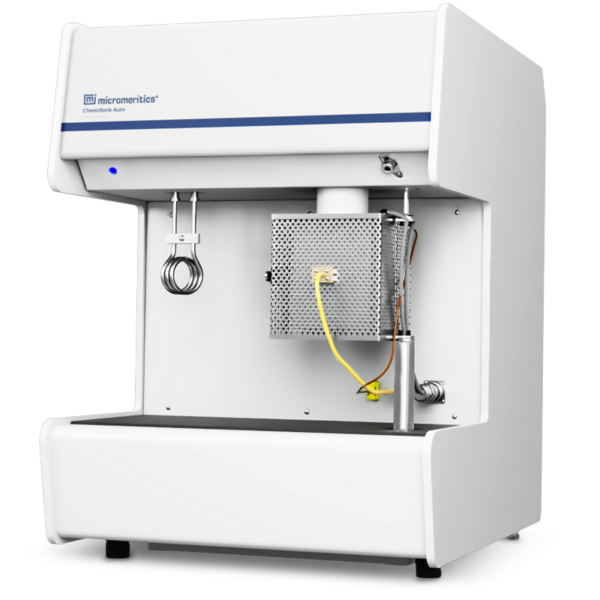
When to choose this option: You work with catalysts and need active metal surface area, dispersion or temperature-programmed reaction kinetics, or you need the adsorption capacity of a material (MOFs, zeolites, activated carbon) for CO2/H2/gases.
Chemisorption is a surface phenomenon in which the adsorbate (gas or vapor) forms a chemical bond with the surface of a solid material – unlike physisorption (see the “BET Surface Area” option), it is a strong, largely irreversible interaction specific to individual active sites. The measurement is performed by the static (manometric) or dynamic (flow, pulse) method and provides key data on catalysts: activation temperature, the amount and strength of active sites, metal dispersion, and behavior through reduction/oxidation cycles. Choosing an instrument depends on whether you need routine/qualification analysis, a larger number of samples in parallel, advanced R&D (TPR/TPD/TPO/TPSR), evaluation under realistic process conditions, or the adsorption capacity of a material for gases such as CO2 and H2.